Tuesday, November 12, 2013

Health as an indicator of good governance

As I wrote about 2 days ago, I have been thinking a lot about health and governance, and specifically, health as an indicator of good governance. What is governance and what is good governance? Much like porn, you know it when you see it (and I would suggest recent behavior on the part of our own Congress is not it.) It is hard to define good governance or even measure it, although we spend gazillions of dollars around the globe trying to assist other nations develop good governance practices (policies). And, frankly, through our efforts, we sometimes fail to assist because we interrupt the natural development with heavy handed resourcing and skew the efforts of the government. I saw that in Afghanistan first hand -- donors were competing to have their agendas met, paying off high ranking Afghan officials (topping off their salaries) in order to ensure they would have a seat at the table. In any case, governance and economics and social orders are all intertwined, and this is clearly articulated in a paper and book (although, admittedly I have not read the book yet), by Douglass C. North, John Joseph Wallis, and Barry Weingast, called "Violence and Social Orders." What I like about their argument is that economic systems and political systems develop together within a social context and violence is part of that construct -- only in a few countries have the political systems been able to push away violence enough so that the economic and political systems can flourish. Here is what they say:
We show how, beginning 10,000 years ago, limited access social orders developed that were able to control violence, provide order, and allow greater production through specialization and exchange. Limited access orders provide order by using the political system to limit economic entry to create rents, and then using the rents to stabilize the political system and limit violence. We call this type of political economy arrangement a natural state. It appears to be the natural way that human societies are organized, even in most of the contemporary world. In contrast, a handful of developed societies have developed open access social orders. In these societies, open access and entry into economic and political organizations sustains economic and political competition. Social order is sustained by competition rather than rent-creation. The key to understanding modern social development is understanding the transition from limited to open access social orders, which only a handful of countries have managed since WWII.
Access to the paper may be had here: http://www.nber.org/papers/w12795 I like this argument because it makes sense. More thoughts on this to follow.

Sunday, November 10, 2013

Health as an indicator of good governance

It suddenly dawned on me this morning (jet lagged) that health is a direct reflection of good governance. An indicator that governments are functioning in a manner that is protective of the people they are governing. Online searching has revealed some interesting work by the Center for Global Development/Global Health Policy. I found an article from 2006 titled "Measuring Commitment to Health" (link:http://www.cgdev.org/doc/ghprn/Measuring_Commitment_to_Health,final.pdf), which describes the CGD's efforts to inform better measurment of government performance in the health sector. It's extremely well done both theoretically and delivery. The authors of this report discuss the Millenium Challenge Account, and how it measures government performance in the health sector, which is interesting:
At the forefront of the movement to link aid allocation to evidence of good governance is the Millennium Challenge Account (MCA), a bilateral U.S. development assistance program intended to promote poverty reduction and growth in countries with good governance and development policies.The MCA, managed by the independent agency the Millennium Challenge Corporation (MCC), uses a set of 16 indicators to measure various aspects of governance and commitment to sound policies in low- and lower-middle-income countries. Countries that perform well relative to their peers on indicators in three categories – labeled “ruling justly,” “economic freedom” and “investing in people” – are rewarded with access to the agency’s nearly $5 billion pool of aid money. For countries that do not pass this eligibility filter, the agency anticipates that the promise of aid in exchange for results will serve as an incentive to improve their performance, and recent research has supported this hypothesis
But what is "Good Governance"? Here is how the authors define it:
The most critical consideration in the serach for a proxy for good governance in the health sector is the definition of good government behavior. For the purposes of this analysis, the working Group poased four questions related to a government's commitment to the health of its citizents: i. Is the government placing appropriate priority on health, relative to its means? ii. Is the government focusing its resources on public goods and essential public health functions? iii. Is the government employing cost-effective health interventions so that limited health resources go furthest toward improved health outcomes? iv. Is the government protecting the poor and other vulnerable populations from catastrophic losses? In concept, then an ideal suite of indicators would relfect all of these elements of a government's health policies. Of these, however, questions (ii) and (iii) are easiest to measure objectively and are the focus of the Working Group's efforts.
Open access to health services of a reasonable standard...I think that's a succint (and not nuanced) summary of what the working group was thinking.

Thursday, November 7, 2013

Syria's war has caused a re-emergence of polio. As a result, the W.H.O. is instituting a campaign to vaccinate 50 million children in the region. The diaspora of refugees undoubtedly will spread the disease. Here is a NYTimes article about the WHO initiative:http://www.nytimes.com/2013/11/07/world/middleeast/who-escalates-polio-fight-in-reinfected-mideast.html?_r=0.

Wednesday, November 6, 2013

http://www.foxnews.com/health/2013/11/01/who-confirms-four-more-cases-deadly-mers-virus/ Photo of corona virus from Fox News story on MERS
Here I am in the Middle East, and a coronavirus has developed that is being called the Middle East Respiratory Syndrome, or MERS. MERS has a nearly 50% mortality rate, and the CDC website claims that it has not yet reached the U.S. Really? That seems highly unlikely. Given the amount of travel between the U.S. and everywhere, and given the massive troop movements through the middle east, I am surprised at this news. Here is the CDC link:http://www.cdc.gov/coronavirus/mers/.
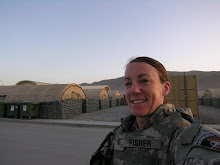
I'm Baaaa-aaacK! Although perhaps the most sporadic blogger in the world, I am persistent. My job in a prestigious defense analysis institutation limits my blogging in an unofficial way. I am on a temporary military assignment for the year, and therefore plan to take advantage of the time and do some blogging! I'm excited. I plan to figure out how to really dig in and do more dynamic presentations and tie in to a community. I have been away for so long I probably have no readers, but that's OK. I'm undeterred. Right now I'm sitting on a mattress in a foreign country in the middle east waiting for a ride to the airport. I DID get my flu shot, although I am not sure it is effective against all the strains that are blossoming and speeding their way around the globe. So, let's see what the internet says about the flu this season...

Friday, August 19, 2011

AMAZING collaboration between military, USAID, and not-for-profit

Wow! I recently heard a speech by Dr. William H. Foege, a world renowned epidemiologist who was key to the campaign that basically has eradicated smallpox (of course, with the exception of in Afghanistan and a few other war-torn areas), among other incredibly notable achievements. In his speech, Dr. Foege claimed that there would be an anti-malarial vaccine produced within the next 2-3 years, which is astonishing news from a very credible source.

This morning's news brings the announcement that the military, USAID and a not-for-profit called IDRI are collaborating to produce an anti-malarial vaccine. It's an incredible story, and if the effort is successful, the world will be changed. Here's the press release URL: http://m.prnewswire.com/news-releases/idri-usaid-strike-new-collaboration-for-malaria-vaccine-development-127868588.html.

I'm (slowly) writing a piece about the military's role in global health, and this kind of activity illustrates the real contributions that the U.S. government, writ large, can make. I hope it is successful!

Saturday, August 13, 2011

Louie Palu photos and essay

Photographer Louie Palau has a compelling piece on the Virginia Quarterly Review called "Total War" here at this URL:http://www.vqronline.org/articles/2010/spring/palu-total-war/, or click on this blog title. A Canadian doc tries to save an Afghan with a gut wound. His photos are evocative and powerful. I'd like to upload one to capture your attention, but I'm sure they are copyrighted.

Navy Corpsmen try to save an Afghan girl

I came across some compelling journalism from Afghanistan (where else?) by a young guy named Elliott D. Woods in the Virginia Quarterly Review. There's a particularly germane piece on how some Corpsmen tried to save a little Afghan girl who was blown up by an IED. It's called "Our Deepest Sympathy." Worth looking over, truly, as are the rest of his stories from "Assignment Afghanistan" at this URL: http://www.assignmentafghanistan.org or click on the title of this post.

Sunday, June 26, 2011

The Global Health Initiative

The President's Global Health Initiative is great--nested within his policy for Foreign Development it lays out a way forward for health development. Eight countries were selected for "fast track" focus: Bangladesh, Ethiopia, Guatemala, Kenya, Malawi, Mali, Nepal and Rwanda. (I would have loved to watch the political debate about which countries were selected.) The paper posted on the White House website (click on the title of this blog to go there) says the eight countries:

will receive additional technical and management support to quickly implement and learn from GHI’s approach, including integrated programs and investments across the health priorities, fostering greater country ownership and targeting health systems activities that deliver results. These countries will provide enhanced opportunities to build upon existing public health programs; improve program performance; and work in close collaboration with partner governments, across U.S. government agencies, and with global partners.


The GHI is a $63 billion program. It will be interesting to see how this, and the foreign development programs, perform. And, I wonder how the DoD is focused on these priority countries, if at all?

Monday, June 20, 2011

More on sustainability

Patricia McArdle wrote an oped descrying unsustainable development. She didn't point fingers at the military, this time, but did use the "s" word (sustainability) to advocate for solar and wind power. She apparently works for a solar cooker NGO. The punting around of the word sustainability is becoming almost comical, and I would laugh were I not so overwhelmingly wanting to bang my head against my desk when I read it.

CERP spending

A good report on CERP spending appeared in the PRISM magazine (from the National Defense University) from March. It's one of the more balanced and insightful discussions about CERP spending. The debate about CERP spending is unending because there is no theory or reliable research being done to support the theory and inform a strategy. So there are many opinions, stated firmly and provocatively, but only partially informed. Get two people together over a cup of coffee with opinions on CERP and you have an automatic debate. In the end they each might be using the words "CERP spending" but talking about completely different contexts, uses, goals and outcomes. However, it will sound like a cogent debate. That's why we need more study, and less polemics (refering to my 2-part complaint about the Congressional report on foreign assistance).

Sunday, June 19, 2011

Evaluating U.S. Foreign Assistance to Afghanistan-- A Two Part Complaint

So, I've read the report prepared by the Senate Foreign Affairs Committee on assistance in Afghanistan and it's completely bizarre, as I feared. Here's how it starts:

"...we believe the administration can be more effective in how it spends aid in Afghanistan. U.S. assistance should meet three basic conditions before money is spent: our projects should be necessary, achievable, and sustainable." (page 2).

I wonder who wrote those two sentences? They are classic. Let's pause for one moment and examine the thesis of this incredible piece of work.

First, it says the administration can be more effective in how it spends aid. What does that mean, exactly? That the money should get more 'bang' for each 'buck'? For example, for every dollar spent, Afghans should get 60 cents in actual assistance -- like meals, water, roads and so forth? Because one OXFAM report claims that something like 40% of foreign assistance is returned to the country of initiation in salaries and payments to project managers and monitors from that country. OR, does that sentence mean that for every dollar spent we should see a resulting decrease in violence in any given area? Or, does that mean that for every dollar spent, the Afghan markets grow by some proportional amount? Or, perhaps it means that for every dollar spent, we should be able to get out of there faster? Or maybe that we have quicker mechanisms for spending the money? Congress appropriates it one day, and it's spent within a week or two? or...? No clear acknowledgement or recognition that money is being spent in Afghanistan in an incredibly complicated context strikes me as irresponsible.

Next, it says that "U.S. assistance should meet three basic conditions before money is spent: our projects should be necessary, achievable, and sustainable." Should US assistance be necessary, achievable and sustainable? Or should projects be necessary achievable and sustainable? Those are two separate things. Here's why.

First, let's look at assistance. Let's say the authors are trying to say that assistance should be necessary, achievable and sustainable. That would imply that there would be clear goals, objectives and programmatic for spending aid money in Afghanistan, which I can tell you is not happening. So, for a project like the District Delivery Program (which I have first hand knowledge of and which was a project to build sub-national governance), before spending money, USAID should have established what the overarching goal was, what the intermediate objectives were, and then how to determine whether those goals were met and the timeline for taking those measurements. If they did this, it was in secret. And I'm pretty sure that although there is some programmatic language for the billions that are being spent in Afghanistan, measures are not really measuring effects. Dear reader, you and I could dream up a great-sounding programmatic justification for spending money in Afghanistan. Delivering the results is quite another monster all together. Who knows if the planned actions are achievable in a war zone being conducted in a fourth world nation. And CERTAINLY the assistance is not sustainable by the Afghan government because that's why it's called assistance. If the Afghan government had enough money to spend on all the development international donors are supporting, then we wouldn't need to assist. Right? Or am I missing something here. Hopefully we are not giving money to countries that don't need assistance.

Next, let's look at the assertion from the standpoint that it means that projects should be necessary, achievable and sustainable. In a fourth world country, where literacy is about 25%, and life expectancy is about 45 years old, any spending can be justified. Any at all. The Afghans need everything. And the more we give, the more they need. What are we trying to achieve by all this giving? Well, that depends. In a lot of cases, we give because it makes us feel good. Soldiers spend money because they are shocked by the conditions, or because a local village leader buttered up a Marine and next thing you know the market has some brand new toilet facilities. USAID spends money because they are told to do so. They are being goaded, prodded and pushed into 'supporting the military' as they say in country. So, let's say all the expenses over the past year in Helmand province were to a) make us feel good, and b) show USAID support to military actions. Did they succeed? Well, you could go there and ask around--ask soldiers and aid workers if they felt good, and ask the military if USAID is spending dollars in support of operations. I think you would find positive results. So, the spending could right away be called necessary and achievable just based on those two justifications--feel good-ism and supporting the military. Are projects sustainable? No, because they are foreign assistance. We just went over that. Are the projects that are being constructed achievable? Yes, most everything is achievable, and very little is not getting completed. From cell phone towers to market toilets to roads to water turbines, projects are being completed all across Afghanistan.

The thesis for this report is askew and politically motivated. The report goes on to make many other circular claims. Like this one, on page 2. Most of the assistance is being spent on short term stabilization programs (undefined, of course). Notice the words "short" and "term". One paragraph later it complains:

"The evidence that stabilization programs promote stability in Afghanistan is limited. Some research suggests the opposite, and development best practices question the efficacy of using aid as a stabilization tool over the long run."

Notice the conflation of applying "development best practices" and "stabilization over the long run". And refer back to the discussion about how most money is being used for stabilization in the short run. So, if it's being used for short term gains, then what's the problem and why is the next paragraph discussing "development best practices" as if that's what is going on?

Another example of circular logic is here:

"The administration is pursuing an assistance strategy based on counterinsurgency theories that deserve careful, ongoing scrutiny to see if they yield intended results."

There is a confusion of reasons for spending in Afghanistan. Not all reasons are mutually exclusive. We could be spending money in a kinetic environment to, say, get a village cleaned up and the men back to doing something productive. It might also start boosting the micro-economic environment as people have a bit to spend and a small market might open up. This may be short-term gain, but it also might not be harmful to long term prosperity. It's a crapshoot. But it seems to me that the development folks are wisely questioning spending in support of a counterinsurgency campaign, but they are unwisely not questioning long term development practices as well. Because to be completely honest, we just don't know what's what and how best to spend money when in a post-conflict environment. It's all unknown and conditional.

Here's the real issue:

"There must also be unity of effort across the U.S. Government and international community. If we conclude that a civilian program lacks achievable goals and needs to be scaled back, no other actors should take over the effort. Too often, when our civilians determine that a project is infeasible, we simply transfer the program
to other actors, such as the U.S. military or other donors."

The report is more bluster than utility. All hat and no cattle.

Wednesday, June 8, 2011

Sustainability

The Washington Post reported that a Congressional study will be released today that announces--shock of all shocks--the development in Afghanistan is NOT SUSTAINABLE! (Here's the post link: http://www.washingtonpost.com/national/national-security/afghan-nation-building-programs-not-sustainable-report-says/2011/06/07/AG5cPSLH_story.html)

Wow. Shock of all shocks--did we spend our tax dollars to come to this conclusion? Because they missed the question--sustainability is not The Question. The question should be: are we spending our development dollars to legitmize the Afghan government? It's all about legitimacy, not sustainability for Jimminy Cricket's sake. If you stop and examine the Afghan budget you'll find out that international donations OFF THE BUDGET account for about 82% of the total spending in Afghanistan, according to the Afghans. (And they can't really get their arms around all the spending. So it's probably more.) What does that mean? That means that for every 100 gazillion U.S. dollars donated by international donors, only 18 percent go thru the Afghan system and help build a government that can function and provide services, and the other 82 gazillion dollars go directly to contractors in the field who then do who-knows-what with it.

Normally, the sustainability mantra is leveled at DoD by the State Department and USAID, as if DoD spending is all the whole cause of "unsustainability" in Afghanistan. This is ridiculous and circular. The Development/Diplomacy community say that DoD should a) build sustainable structures, and not structures that fall down because the Afghans will be psychologically influenced (Seriously. No Joke, that's what they say.); and b) they also point to CERP spending and say that it's all unsustainable. SERIOUSLY? Here's the side of the argument that never gets discussed: there are only so many contractors in Afghanistan, and really, we are all using the same unskilled labor. USAID, for example, is building equally shaky roads, bridges and canals, buildings and so forth because we are all using the same unskilled labor! And, I'd like to know what survey shows that the Afghans will be psychologically influenced by the soundness of the development projects? The second argument is equally as bizarre. CERP spending is only a fraction of the total aid money being poured in to Afghanistan. When USAID, for example, builds a road, they also don't dump money into the ministry that is responsible for maintaining that road. Hence, the next winter/spring flood, the road washes out, and voila, the road was unsustainable, just as if CERP money had built it.

Even if you level the unsustainable argument against both the State Department and USAID and DoD all together, it still doesn't make sense. Because the bigger point that nobody wants to discuss because it's too hard, and it's much easier to wrangle among ourselves, is this question: if we don't dump money into a country like Afghanistan where there is about a 75% illiteracy rate, where people expect to live to the age of about 45, and where infant and maternal mortality rates are some of the worst in the world...then what is the alternative? I'd like to hear an alternative proposal from the development experts and the cast of staffers who concluded that aid to Afghanistan is not sustainable. (I wonder if they looked at aid to any other of the countries we assist? I'd bet they'd find out it too was not sustainable, because that's why it's called-- you guessed it-- aid. If the country could afford the programs itself, and thereby have sustainble programming, we wouldn't be giving it aid.)

Sustainability is one of those wonderful rosy terms that everyone likes to use--and of course, we can all agree that everything should be sustainable. But it's not pragmatic, and to my mind the wrong question for Afghanistan. The right question is: is our spending creating legitimacy? They are two different questions.

I'll be interested to see the Congressional report.

Friday, April 29, 2011

USAID feels bullied? Do we care?

OK, I have to say that it's amazing to wake up in the morning, open the paper to read about how screwed up USAID is, and then read that they are feeling "bullied" into supporting military efforts in Afghanistan. First of all, who cares what they are feeling? I only bring this point up because in my experience, it's not uncommon to hear from USAID staff objections like this (in country) as if they are somehow valid and reasonable perspectives to be discussing in the middle of an armed conflict. Logically, how can you respond to this kind of statement? "Wow, sorry you feel bullied, shall we stop the war and have some apple tea and investigate those feelings?" "Tell me more about it? What in your childhood would bring this feeling up?" I know i am sounding snarky, but I absolutely cannot understand this institutional stance and culture. And it was constantly used in Afghanistan. Sorry, we can't make a decision on how to fund this MOST CRITICAL sub-national development program because we are considering how mean the military is. I actually sat in a meeting at the U.S. embassy where the senior leader spent 55 minutes in discourse about how awful it was that he didn't know the phone numbers of all the (5? or 7?) military people who were working in Afghan ministries. All he had to do was ask for a list and we would have provided it. Next topic! Like, I dunno, how to fund that most critical program?

I worked on a program called the District Delivery Program, which was really a pretty well-thought out program. It took USAID more than 3 months to review a 20-page document outlining costs that they had themselves helped to prepare and approve it. Three months is like an eternity in Afghanistan. Especially when we are going to experience a draw down soon. It was the oddest experience I have ever had. The people were great--smart, dedicated and diligent, but just nearly completely ineffective.

USAID has fielded all kinds of people into remote areas of Afghanistan with little strategy and/or supervision as well. That's part of the much-trumpted "civilian surge". They are bureacratically not set up to deal with what is going on in Afghanistan and they seem to be making no real attempts to amend their internal processes to the context. Probably because they are feeling bullied.

I know in one province that USAID was funding more than 50 programs and that NOBODY checked on those programs on a routine and systematic fashion. They didn't have the staff, the mobility, or the responsibility. That's your tax dollars hard at work. USAID routinely use the self-reported data from their contractors as their evaluation of their contracts. So for example, in the Post you can read that the primary contractor claims his program a huge success because he hired X,000 of hours of Afghans to clean their own canals. Really? Did anyone go check? I mean, if you ask me if my efforts were successful, and make award of my next pay check contingent on my own response, then yes, I can tell you that the work I do is probably the most valuable in the world, let me just think of how to describe it to you.

Here's the article in the Post: http://www.washingtonpost.com/world/us-military-dismayed-by-delays-in-3-key-development-projects-in-afghanistan/2011/04/22/AFD6jq8E_story.html?hpid=z2

Wednesday, April 27, 2011

The Soft Power Debate

Kenneth Adelman takes aim at Joseph Nye's "Soft Power" construct in this Foreign Policy article: http://www.foreignpolicy.com/articles/2011/04/18/not_so_smart_power?page=full

"Huge recipients of U.S. foreign aid -- Egypt, Pakistan, and the like -- voted no more in tune with American values than similar countries that received no, or less, U.S. foreign aid. Instead, their votes correlated closely with those of Cuba, which wasn't a big foreign-aid donor.

That finding, surprising at the time, remains true. Four of the largest U.S. foreign-aid recipients today -- Egypt, Israel, Pakistan, and Afghanistan -- all take contrary positions on issues of critical importance to the White House. South Vietnam once got gobs -- gobs upon gobs -- of U.S. foreign aid. That didn't help much. Likewise with Egypt, Iran, Pakistan, Zaire (now the "Democratic" Republic of the Congo), and other "friendly" (read: graciously willing to take U.S. money) countries.

The conclusion seems clear: The relationship between "the United States' ability to positively influence events abroad," as Nye puts it, and the amount of U.S. foreign aid a country receives is unclear at best. For decades now, the United States has been the No. 1 foreign-aid donor -- it has given the most money to poor countries -- so it can't move up any on that scale. But this hasn't translated in making America the most popular or most influential country around the world. Quite the contrary."


I'm starting to be more and more skeptical of "soft power" myself. Especially when it seems to be used as an excuse to act upon our impulses to do good, rather than a real tool to promote American agendas AND do good. It seems, sometimes, as if we are a nation of dysfunctional d0-goodism, dumping billions of dollars of aid into places like Afghanistan where it ultimately fuels corruption and does little for the people. Less might be more, sometimes. The problem with "soft power" is that we indiscriminantly use that concept to dump aid with little measure of ROI (return on investment). And I'm even now beginning to think that we de-legitimize countries where we dump aid. Like Afghanistan.

Monday, April 25, 2011

UPMC Biosecurity Center

Amazing what is getting posted on the web. Here's the University of Pittsburg Medical Center's Biosecurity Center's one-day seminar on US Investment in Global Health Security on YouTube: http://www.upmc-biosecurity.org/website/

Saturday, April 23, 2011

Two-fer: Libya and Legitimacy

Today's post has two themes: Libya (and where are the hospital ships?), and Legitimacy worries.

Yesterday's Washington Post ran a front-page photo of Libyans on board a ferry. The caption read that the ferry has been turned into a hospital ship, essentially. Which, of course, prompted me to figure out where is the Comfort and the Mercy. Odd that we are sending armed drones and special advisers, 'humanitarian defense equipment' like body armor and HMMWV's. But no relief capability. It strikes me as perhaps short sighted. Though, maybe not. I'll get to that in a moment.

Anyhow, I was looking around on the web to see where the Mercy and Comfort are, and found this interesting blog: http://blog.usni.org/2010/01/25/time-to-reactivate-the-usns-mercy-t-ah-19/

There was quite a lively debate about the Mercy and the Comfort. The Mercy website is not forthcoming with information about where it is at the moment, and it seems as if it might be in dry dock (from surfing various web pages). Here's the Mercy's web page: http://www.med.navy.mil/sites/usnsmercy/Pages/default.aspx

It seems like "soft power" is not an option at this moment, and I wonder why. Maybe our doctrine is too muddled? Maybe sending a hospital ship full of interagency partners to a war zone is a non-starter? Maybe we don't have an agile-enough capability? The Chinese hospital ship, the "Peace Ark" is nowhere to be found, at the moment, either. Tho I did find a note that the Chinese had offered it to the Japanese. (Yes, that's not a typo.) China is "all about" Aftica--it's resources will provide power to the Chinese for decades to come (while we are distractedly thinking of power in terms of military might). I was suprised that I didn't see the Peace Ark being offered up.

Back to my thoughts about the non-crisis humanitarian assistance missions of these ships: I was chatting with a colleague recently who has thought a lot about the legitimacy of governments-- or, the lack of legitimacy where these hospital ships do their service. It suddenly dawned on me that the U.S. might be cutting off its nose to spite its face, in a manner, with these non-crisis humanitarian missions. So, for example, in the context where DoD sends a hospital ship to a country that is not in conflict to provide medical care, there is a greater risk of further exposing the inability of the country's legitimate government to provide basic services to its citizens. Sort of an awkward sentence, so let me try again. What I'm suggesting is that in countries where there are fragile governments (most really poor countries), dependence on foreign assistance is generally endemic. There are typically a gazillion donors and NGOs earnestly working hard to help the people, and the people do not expect their own government to provide medical care (hypothetically).Even though DoD gets permission from the host-nation, I wonder if stopping in and doing some non-emergency humanitarian action might be good for the people who received the care, it might make us feel good about ourselves, but harming the overall system? Are we deligitimizing the already-fragile government? Has anyone studied this? Or are we happy to be doing great deeds of service, and hoping it all works out in the end.

That's the twofer today.

Thursday, April 21, 2011

Google search trend tool

Google has a really interesting search trend tool available. You can track search trends (like "military" shown on the right) across time and in location. It provides a graph indicating normalized trends as well as a graph that shows any news stories and volume of news stories related to the search trend. It's amazing!

Google searches can predict the flu!!

Holy COW! I'm probably the last person in public health to know this, but the rate of google searches for "flu" closely matches the actual incidence of flu! I didn't read the journal article (yet) but you have GOT to look at this--it's amazing. The implications are huge. Google search as a surveillance tool is actually a really great idea!

"Google Flu Trends estimates flu activity for a number of countries by using aggregated search query data. The system provides users and public health officials with near real-time estimates of flu activity in their region. Traditional surveillance reports come directly from doctors and other health service professionals, sometimes with a delay of up to 1-2 weeks."


Here's the URL (or click on the heading)

http://www.google.org/flutrends/about/how.html