skip to main | skip to sidebar

MENDSTATE

Health: Defense, Diplomacy and Development

Showing posts with label The Defense Development Diplomacy triad. Show all posts

Saturday, October 30, 2010

Ashraf Ghani


Kabul Afghanistan has terrific weather. Dry air, cool evenings, sunny days...weather that you would happily consider retiring to. On a balmy evening last spring, when the air was just warm enough to feel soft on your skin, the breeze light and not forbidding, and the sun was just setting over the mountains so the sky was pastel ivory and pink, I was scurrying from my desk to dinner when I ran in to Lieutenant General Rodriguez standing outside the headquarters building waiting for someone. I snapped a salute and he saluted me back, then engaged me in a moment of pleasant chatter. I was honored, of course, that such an important man would engage me. Honored? No, more like stunned. Blinking up at him and smiling. Probably saying stupid things, or at the very least, trying to think of non-stupid things to say. In the midst of this inner turmoil, LG Rodriguez then changed the topic -- asked me for a favor, even. Of course, I replied. Ashraf Ghani is coming, he said, and he had left some important papers on his desk--would I fetch the papers? Who ME? I'd LOVE to fetch the papers, of course, right away Sir. I had never even thought about approaching the Inner Inner sanctum-- the General's Office-- which is revered and feared much like the elementary school Principal's office. I scurried back into the building to fetch the papers. Who is Ashraf Ghani, I wondered? Didn't he run for president, maybe?

Darted into the General's office, found the papers, darted out. The sun had sunk just below the mountain peak way off in the west. The General looked at the papers, then looked up at the mountains, and smiled and thanked me as if I had just done something important. I considered leveraging my moment of glory to ask who is Ashraf Ghani? But just as I was considering, a white pickup bristling with Afghans and guns zoomed up followed by an armored SUV. As if choreographed, the moment the vehicles slowed just enough, a beautiful man in flowing robes exited the SUV with a smile. As if Venus alighting from the Clamshell I remarked, surprised. He warmly grasped LG Rodriguez's hand and they swished in to the building for their meeting. Clearly Ashraf Ghani was someone. No, I mean Someone. Big S. A colleague passed me by on the street just then and said, that was Ashraf Ghani. He's the most wanted man in Afghanistan. What? I asked. He didn't look hunted. He looked angelic! We laughed.

Turned out Ashraf Ghani had run for president of Afghanistan, and has done so much more. He was the finance minister for Afghanistan, he is an advisor to Afghan President Karzai, and he is a reformer of international aid, former World Bank Employee. He runs the Institute for State Effectiveness. That was what my google search turned up.

Less than a month later I was in Kandahar. Kandahar has weather that you would not retire to. Dry, boiling hot and dusty. It's flat there, with odd spires of rock that protrude from the desert floor like the spines on a reptile's back. The dust is a soft powder brown and as you sweat, it sticks to you in a fine even coat. The only nice weather is at sunset when the sky turns rosy and the call to prayer meanders across the desert floor like steam from a tea cup, redolent with ancient meaning. I was down in Kandahar on business, waiting for my flight home, tired, perusing the 'donated books' shelf. My body armor already on, I felt hot, sweaty, distracted. I just needed something to read for the trip back to Kabul. Lots of science fiction floats around these donated book shelves, romance novels and other relatively unidentifiable material, mostly with eye-catching covers and little substance in between. I scanned the shelves, nothing. Then, in the very corner of a shelf I saw a hard bound book. Those are not usual, so I focused...Ashraf Ghani and Clare Lockhart "Fixing Failed States". What? Ashraf Ghani! The most wanted man in Afghanistan!! (I don't know if this is true, but of course it's the kind of thing you would remember). Gotta read it.

Here's a link to Ashraf Ghani and Clare Lockhart's Institute for State Effectiveness: http://www.effectivestates.org/. One of the themes Ashraf Ghani and Clare Lockhart return to in the book and other writing is the incoherence of the 'intervening' states' programs. By that I mean the incoherence of the aid agencies of various countries as well as the incoherence of programs between the aid agencies and the military. Generally speaking, as various donor nations seek ways to support a weak government, they take on individual programs and projects and then become protective of those programs, competitive, even. The agencies compete with each other to place 'technical advisers' in the nation's governmental organizations. The technical advisers report back to their country, promote their own programs above others and compete for time with the top ministry staff and ministers themselves. Government agencies and officials are often whipsawed between competing demands made more salient by associated programmatic funds. Many nations also pay for top up salaries to high-ranking national staff and ministers, with the richer nations creating a competitive environment for ministerial staff to play one nation against the other. The military is often involved not because of the money and expertise it brings, but because of its sheer massive size and presence. It's wasteful and generally counterproductive. And Ashraf Ghani and Clare Lockhart speak out about it. After reading the book, I wonder if Ashraf is the most wanted by aid agency staff as opposed to nefarious Afghan characters?

Here is a link to a report describing the results of an exercise conducted by the Center for American Progress that tested reforms needed in the U.S. Government's approach to nation building: http://www.americanprogress.org/issues/2009/03/swords_ploughshares.html. They
recommend, not surprisingly, that counterinsurgency and development strategy must be harmonized. But how.

Last spring, back in Kabul, the higher-ups, as senior officials are sometimes called, demanded a description of civil-military cooperation. ISAF and donor nation embassies and aid organizations all gathered together for a formalized briefing of how we all were cooperating. It looked great on the slides. The civilian diplomatic and development community were hard at work pouring billions of dollars into a financial system that can't absorb the money, and the military was diligently fighting insurgents. Meetings had been conducted, and programs were in place. It looked well.

But the problem for us to consider is whether the Afghan woman who lives in a village really could feel the difference? Could that woman really feel that their own government had finally gathered itself up and provided her electricity or water? I would guess not. Not in most places where the combined community claims to be engaged, anyhow. To be fair, there are successes--Kandahar and Helmand province, some places in the East and the West. But not the scope nor the depth of effectiveness that one might (falsely?) expect given the vast resources being poured in to the country. This is the crux of the matter, the proverbial hard-nut-to-crack. The community has not really changed enough to make it matter, even in spite of the millions of pages written and billions of dollars poured.

I'm writing a paper on this, and when I'm done I'll post the nuggets here. I don't pretend to have the all the answers, but the problem was one I lived for 16 hours a day, 7 days a week, and its glare will not leave me. I dream about this problem. So I have to write about it. Meanwhile I'm re-reading Fixing Failed States which I sent home to myself. Ghani and Lockhart probably have all the answers: at least I hope they do.
Posted by Gail Fisher at 6:40 AM 1 comment:
Labels: Afghanistan, Ashraf Ghani, Center for American Progress, Clare Lockhart, Institute for State Effectiveness, The Defense Development Diplomacy triad

Monday, July 27, 2009

Is it a battlespace or is it "humanitarian space"?

My colleague Dr. Gene Bonventre has been hard at work considering ways to get USAID to work with DoD. One of the irritating fundamental arguments I have heard from USAID/DoS and NGO personnel against DoD's work is that we are 'crowding the humanitarian space'. Part of the problem, in my view, is that DoD doesn't view where it works as "humanitarian space." Afghanistan, for example, is a "battlespace" in my view. Some USAID personnel do not share that view and believe the country to be a "humanitarian space" that is being poisoned by DoD. In fact, some would argue that DoD's presence in Afghanistan creates danger to their personnel. From the DoD perspective, the U.S. President ordered up a war against the Taliban who were lurking in Afghanistan.

But back to the brilliant Dr. Bonventre who used to work for DoD. He apparently has been slaving away on a committee to make recommendations about how we can all get along. The report is here: http://www.usaid.gov/km/seminars/2009/civilian_military_relations.pdf. I haven't read it thoroughly yet but it looks promising.

Also, Dr. Bonventre and another brilliant former military guy, Dr. Skip Burkle, have posted their views here, on the New Security Beat blog ( http://newsecuritybeat.blogspot.com/2009/07/who-does-development-guest-contributor.html?showComment=1248726308123#c3239810732797271218).

I take issue with Skip Burkle's blog in that he views the discussion from a development perspective (the title of the blog, after all), and he maintains that USAID is best for development actions. He criticizes Secretary Gates for asking for more civilian personnel positing that Gates was asking for the personnel to be under the control of the military. Finally he criticizes DoD for be inexpert at development which he calls "winning hearts and minds" and which I would argue is "counter insurgency" when referring to Afghanistan and Pakistan. Regardless of his critique I think the question is the wrong question.

I don't think we have the luxury to have "either/or" agencies any more. I have written about this before--I think Michele Flournoy hit the nail on the head with a proposal for a new breed of security expert. Or, you could have a new breed of development expert. Either way, staff at USAID who are being paid with my tax dollars should be promoting the US Government agenda, and part of that is our national security interests. Cognizance of what that is would be a good starting point. Much like we can no longer leave military actions in these hybrid wars to the combat arms dudes who view every problem as something to shoot and kill. The world has moved on, but perhaps our gut reactions have not.
Posted by Gail Fisher at 4:08 PM 2 comments:
Labels: A new national security profession, Afghanistan, counterinsurgency, Department of State, DoD, The Defense Development Diplomacy triad, USAID

Tuesday, June 16, 2009

America's Global Health Influence from the Kaiser Family Foundation

I was discussing DoD's role in global public health with colleagues yesterday. Most people asking "what is DoD's lane" in global public health are from outside the DoD, and are part of NGOs, IOs, and other USG agencies. The Kaiser Family Foundation and CSIS are addressing the US government's role, and they have some interesting information posted on their website (http://globalhealth.kff.org). They not only have a break down of the monies spent by various agencies, they also have conducted a poll of American opinions about sustaining the substantial investment that the US is making around the globe.

I am beginning to think that the question of DoD's role in global public health is the wrong question, and is really being posed by people from within organizations that have options to either engage or not engage at will. The DoD, unlike other agencies, is not actually free to decide where it will engage, strategically speaking. Of course, at the tactical or programmatic level there are always decisions being made that have some effect. For example, the much-derided 'Medcaps'--somewhere at some level is a DoD employee who decides whether a medcap will be conducting in town X versus town Y. But at the strategic level, the DoD is engaged in Afghanistan and Iraq at the pleasure of our country's politicians. Not at the behest of Secretary Gates. Adding to this perspective of limited choice about the matter is the hierarchical nature of command. All military personnel understand that when the commander (at any level) says jump, everyone jumps. So, when a maneuver commander in Iraq tells his doc to go out and arrange a clinic in the nearby town, the doctor pretty much figures out how to do just that. There's only a very limited amount of free-will in the matter.

It has begun to occur to me that the question of DoD's role, as asked by those from within agencies where people at very low levels are directing programs and making independent decisions, and from within agencies that can decide to be in, say, Iraq, is being asked from the perspective and culture of will. The answer, from a DoD perspective, is that we go where we are told and do what we are told to do in the best way we can figure out. This answer is less than satisfactory to most questioners, and they keep asking.

So, I'm coming to the conclusion that the real discussion should be held at the point of contention: the competition on the ground or in the 'humanitarian space' as it is called. The real question, it seems to me, should be how can we mitigate profound confusion and misalignment of intent? The topic that nobody wants to address is right there: intent. The institutional bias of the Department of Defense will always make the health of other populations a secondary result or interest. In other words, the DoD is actually a health-destroying war-making organization. We know how to fight conflicts. Even in counter-insurgency when the goal is to secure populations and 'win hearts and minds', the DoD's focus will be on security. That's the fundamental nature of the beast. Not making foreign populations healthy. So, how do we create some order and sense of cooperation among the various actors? I think this is the more productive question.
Posted by Gail Fisher at 8:03 AM No comments:
Labels: DoD, Kaiser Family Foundation, The Defense Development Diplomacy triad

Monday, April 20, 2009

The End State--do the ends justify the means?

I was in Command and General Staff College (which the Army has now mysteriously called "Intermediate Level Education" or ILE...how unromantic) this weekend and we are learning how to write a commander's intent. A commander's intent is how the commander tells his staff what he/she wants to do next, and in general terms, how it's going to get done and what the end looks like. Don't tune out yet, there's a tie-in here.

So, we learned that the commander's intent has three parts-- the purpose of the action-to-be (we are going to charge the hill so we can take that high ground and win the war); key tasks (fix bayonets and on my order charge up hill); and then a description of the end state (the enemy will be destroyed, and we will be hoisting our flag, and the sun will come out, doves will float around). The description of the end state, as it turns out, has three parts, too: a description of friendly forces, a description of the civilian population (where relevant), and importantly a description of the enemy forces.

The instructor had a slide up on the screen and we were glibly moving right through this topic when I suddenly came to the realization that the end state for our conflicts in Afghanistan and Iraq do not match up across the government, I don't think. I brought this up to the class because my colleagues are all talented and come from a variety of backgrounds. The intelligence guy challenged me and thought that the end state is well articulated and clear: obliterate Al Quaeda. Yes, I retorted, but do you think that's the end state envisioned by USAID and the Department of State? And, by the way, is that an appropriate end state? If you read Dave Kilcullen and Gallula others, insurgents don't just get destroyed and disappear as do conventional militaries. They remain active at a very low level for a long time, constrained by civil and international law and police actions, then eventually they peter out. Which end state do you think the Department of State uses? And for that matter, what's the end state that USAID uses? Do they even have an end state articulated?

I keep asking the question if the Department of State and USAID are fighting a counter insurgency of every DoS and USAID employee I meet. Some will argue that they are--USAID, it has been explained to me, is providing some kind of emergency funding as opposed to development funding in Afghanistan, proof of their counter insurgency effort. I remain unconvinced. Although the type of funding certainly is important, I wonder what the vision is for the use of the funds? Humanitarian assistance? Relief of suffering? Is that truly counter insurgency? What if you relieve the suffering of the insurgents themselves? I asked this same question of a civil affairs officer who explained (patiently) that the tasks laid out by the Department of State S/CRS can be matched up to the tasks and lines of effort the military uses. Yes, we can both build clinics, but if I'm building a clinic to co-opt the population and separate it from the bad guy, and USAID is building a clinic so everyone (even the bad guys) can be healthy, we are doing the same thing for two different ends. They might be complimentary actions but then again they might not be. And it seems to me that we need to first of all fight insurgents, and as a second priority make everyone healthy and happy.

If you look at War and Health, Chris posted a blog about humanitarian deaths in Afghanistan (here:http://warandhealth.com/attacks-on-humanitarians-in-afghanistan/#comments) . Off the top of my head I think there were about 150 hostages taken and 40 murders last year. USAID does not use the same force protection posture for its employees, and their "NGOs" are most certainly left to their own judgement. Are they really fighting a war? Do their development efforts measure up to trying to stabilize the population? Or, are their actions creating more instability by creating targets of opportunity? Also, is USAID working with the Minister of Public Health in Afghanistan, say, to target the most influential community members in order to spread approval of the central government's efforts? Or is USAID doing "good work" around the country, developing the health system equally so that "everyone" can receive a health benefit? The two actions might conflict.

I want to be clear that I remain unconvinced one way or another. I simply don't have enough information. I AM convinced, however, that until the entire US government decides to fight a counterinsurgency we will not win. The military cannot win a counter insurgency in a foreign country all by itself. It can only fight the symptoms of the counter insurgency. It's up to the political and developmental sectors to really win. I can only hope they understand this. Otherwise, we will have invested millions and even billions to develop structure for what eventually becomes another oppressive and despotic regime in Iraq and Afghanistan.
Posted by Gail Fisher at 7:03 AM No comments:
Labels: counterinsurgency, Department of State, end states, The Defense Development Diplomacy triad, USAID

Tuesday, March 17, 2009

Down with "Roles and Responsibilities"

I'll just get it right out: the endless discussions we are having in the government about "roles and responsibilities" of the various agencies are fantasies. I agree with Michele Flournoy in the Armed Forces Journal (In search of harmony: Orchestrating 'The Interagency' for the long war, available here: http://www.armedforcesjournal.com/2006/07/1857934.) She basically says that what we need are a new breed of national security professionals who are "development-diplomats" and "defense-development" experts and so forth (those are my terms, tho), and who are trained at a national security institute--like the National Defense University.

What I would like to see are 'functional' experts who understand global public health across the security domains of defense, development and diplomacy. I'd like to know that the government has a team of experts who sit next to each other and understand how the bad guys are using health as a commodity against the U.S., and what strategies the U.S. is using against them in return. And I'm not just talking about biosecurity either. How about an expert who understands how to reach out to other countries like China in order to partner and do good around the world?

Instead, we seem to be locked in a do-loop of discourse about how the DoD should not be working in the "humanitarian space", for example, because we make the world dangerous. And how USAID's problem is that it can't leave the FOB. And how the Department of State is so weak it couldn't lead its way to the bathroom down the hall. And then the NGO staff stand up at meetings and talk as if ALL NGOs were all working with the same pure motivation and intent, born from a "human rights" perspective that is shared world wide. And the message from all of this is that if only we all knew our roles and responsibilities, and would climb back in to those boxes, then life would be much less frustrating, our actions much more legitimate (see my previous post about legitimacy), and the world an all around better place. And it's the fault of the "other guys" that the world is not 'better' already. Unfortunately, that's just way too easy.

Call me a pragmatist, darn it, but the world is what it is, and what we need is a way to deal with it. A flexible, responsive and initiating way of dealing with it. That is going to take a new breed of national securitists who are sophisticated and smart.

The discourse must change: we need to stop with the "roles and responsibilities". We are all in this together--the "humanitarian space" is populated by NGOs, DoD, USAID, DoS, USDA, private security firms, IGOs and more. It's a cacophony. And there you have it. What we need are good rules for working together, and good processes to at least share knowledge of our often conflicting actions. We must understand that there are differing purposes for being in the humanitarian space, and therefore take different actions. The most reasonable thing we can do is figure out how to best deconflict those actions. It makes sense to have a USG strategy, coordinated across agencies for initiating action and for responding to changes, and "Roles and Responsibilities" is not going to get us there.

The USAID is sponosoring a 90-day assessment in Afghanistan of all USG health development work. I hope it talks about processes, coordination, and methods to at least communicate actions. I look forward to the result.
Posted by Gail Fisher at 6:53 AM 3 comments:
Labels: A new national security profession, smart power, The Defense Development Diplomacy triad

Sunday, January 18, 2009

Defense, Diplomacy and Development: A Gordian Knot?

CSIS issued an interesting report a year ago which I just finished reading this morning called "Integrating 21st Century Development and Security Assistance; Final Report of the Task Force on Nontraditional Security Assistance." The report can be downloaded here: http://www.csis.org/index.php?option=com_csis_pubs&task=view&id=4236. I liked the thoughtful writing and thought that the report provided insight into the diplomacy-defense-development nexus which is quite a Gordian Knot for practitioners and for the various involved agencies. I will write more about this report later, since it caused me to more clearly consider the legitimacy of the NGO claims against DoD--and in my mind pointed out why DoD may be somewhat unresponsive as a bureaucracy to those claims. But that controversial post is for the future.

I was also reading a report from October 2008 called "Health System Reconstruction: Can it Contribute to State-Building?" The report was commissioned by the Health and Fragile States Network and can be downloaded here: http://www.healthandfragilestates.org/. In it, the authors investigate, with a clarity that I have not see before, the argument that development of health systems creates a more resilient state. They define "resilient state" by these characteristics: a state with organizational and institutional capacity (to make and enforce policies, ensure the implementation of state-sponsored programmes, etc.); with legitimacy; with political processes to manage expectations (the compact between state and its citizens); and with access to resources. I think defining these characteristics further clarifies the argument heard over and over again that "health diplomacy" is probably a good thing for the U.S. to do, especially in the context of the Global War on Terror, since it builds legitimacy of foreign governments. The authors of the report conclude that this argument, that building health systems in fragile states will legitimize the state (and the successor argument that we should therefore assist with health system development because legitimizing states will mitigate development of terror networks and reduce potential for attacks against the U.S.) is unsubstantiated at this point. I'm not surprised.

Further, I actually wonder if building health systems in fragile states (whether being done by the U.S. government, U.S. military or NGOs or all three) might be a stimulus for Islamic terrorist groups? I know, this is heresy, but my general train of thought is this: Islamist terrorists are waging a war that is based on profound and inarguable religious beliefs. They believe the West is wrong, generally put. We (the West, or America) come in to their communities and try to assist their opponent governments, which are very weak, with building health systems so that the government may be responsive to its divided people. The first problem with this scenario in my mind is that not everyone all around the world expects their government to provide health care services or systems (so that others -- like NGOs -- can deliver the care). So trying to get a government to establish a system might not be enabling the Citizen-State relationship that we in the West prefer to see. In other words, our actions are never going to produce the results we hope to see. In fact,we might actually be disrupting the expected governance structures which might be based less on central state governments or on governments at all, but be based on 'war lords' or local strong men. Could it be that we sometimes are stimulating further disruption by our "good deeds"?

Assuming that we feel it somehow a basic and shared human value (Condoleeza Rice has said something to this effect) that all people should get health care everywhere and that by extension, we should try to work toward that end, we must act with caution since apparently there is no recognizably effective method of acting. The Western world often feels that it has a moral imperative to assist with saving lives where ever and whenever it can. But does that life saved cause another life lost elsewhere?

I am not a proponent of endless navel-gazing while these important issues are pondered by wise men with long beards. But I am a proponent for action which is documented and which can therefore be considered and assessed with some clarity for 'course correction' in further actions. The Health and Fragile States Network report should send a chill through the Gordian Knot of U.S. diplomacy, development and defense communities which are now engaged in trying to be more effective, as evidenced by the CSIS report. But it probably won't.
Posted by Gail Fisher at 11:25 AM No comments:
Labels: The Defense Development Diplomacy triad

Monday, January 12, 2009

GAO's 13 Priority Items for the New Administration

The Washington Post has picked up on a webpage posted by the GAO that apparently is designed to influence and inform the incoming administration about what it considers the top 13 items of concern. (As an aside, one of the top thirteen problems is the conversion to digital TV. Amazing that television technology is equal to defense problems.) The GAO page can be found here: http://www.gao.gov/transition_2009/.

Six of the thirteen items deal with defense issues, and four of the thirteen related to health, the military, and the military health system's efforts in global public health :

-Preparing for a public health emergency
-U.S. efforts in Iraq and Afghanistan
-Undisciplined defense spending
-Improving U.S. image abroad

I suspect that the GAO reports that support each of these topic areas do not link or even discuss the military's global surveillance efforts and the effect that it has on preparing the U.S. public for a health emergency (or on the military's energetic efforts in pandemic influenza preparations), for example. But in all honesty I need to read the reports to be sure.

What I do know is the confusion of the post writer in today's paper when he broadly linked DoD's strategic communications efforts and information operations efforts in Iraq with public diplomacy. Here is Walter Pincus' article: http://www.washingtonpost.com/wp-dyn/content/article/2009/01/11/AR2009011102122.html?nav=emailpage.

Not to dive in to the unending debate about the difference between strategic communications, public diplomacy and information operations, the point here is that DoD has purposes which tend more toward fighting wars than making people love the U.S. The significance of this is important because the techniques used, money spent and outcomes produced are not the same for DoD as for, say, the Department of State.

Similarly, sometimes when DoD medical personnel perform health missions abroad they are doing so to 'win the war' and not necessarily to better the health of the people they interact with. In fact, I would suggest that most of DoD global health missions are conducted for reasons other than promoting healthy populations abroad. While this seems ethically challenged, the good thing is that in fact the secondary output of these missions is that people receive medical attention. Whether or not their health improves is another question all together. Practitioners from the US AID shudder with this kind of thinking, but in the same breath will say that they are doubtful about DoD's role in global public health.

This same point can be made regarding public diplomacy. DoD has the responsibility to support the development of Iraq and Afghanistan, in concert with other agencies and organizations. The SOFA agreement withdraws all combat forces by June of this year and the entire military by the end of 2011. The Department of State and USAID can remain in country. Just these time lines alone dictate different possible approaches.

Subtleties of purpose are causing great consternation in practice between the agencies. Congressional misunderstanding does not help. Recently, Congress asked the DoD to stop spending so much money on strategic communications in a number of areas. Is the Department of State going to take up the important work in Iraq and Afghanistan, and integrate military missions with messages? Hopefully not. Hence, when Walter Pincus links public diplomacy and DoD's information operations/strategic communications together the danger is that Hill staffers will not understand the important distinctions and add to the challenges of succeeding in Afghanistan and Iraq.
Posted by Gail Fisher at 7:13 AM No comments:
Labels: The Defense Development Diplomacy triad

Saturday, December 27, 2008

Must-read: presentation by HHS Secretary Leavitt on Health Diplomacy

On December 12, HHS Secretary Michael Leavitt gave a really terrific presentation on the importance of health diplomacy for the CSIS speakers series (http://www.globalhealth.gov/news/news/121208b.html). His discussion was one of the best that I have considered recently. I recently put on a symposium for the Asst Secretary of Defense for Health Affairs called Culture, Health and Human Security where Dr. Steve Morrison spoke about the DoD's role in foreign policy. He too made similarly powerful points. (I'm struggling to get a web page up with the video of the presentation, but will post a link once I'm successful.) They seem to share a similar vision about the nature of health diplomacy, the challenges and the solutions. I'm glad to read such sophisticated and interesting analysis and wish it were wide-spread.

One of the more important points, to my mind, that Secretary Leavitt made was this:

Health is a legitimizer of governments and of
ideologies....(p. 13) The fact is in many regions of the world, democracies
are in a test-drive status, if you will. Healthcare is a
litmus test for these governments on whether they are
legitimate and whether they are affective. Using healthcare to
discredit democracy and the ideologies of liberty is a tactic
that is right out of the insurrectionist’s handbook. (p.15)
Secretary Leavitt describes how Castro exports poorly-trained doctors all over the world to under-served areas. The doctors fill a void (tho perhaps not very well) for medical services, and as an added bonus assist with political agitation. Castro makes money off the exportation of these doctors which furthers his ability to create more. According to Secretary Leavitt, Hugo Chavez is starting the same model.

In Central America, I believe we’re at some risk of
seeing 30 years of progress toward democracy erode. In country
after country in Latin America, leftist governments are being
elected. Healthcare is being used by their left-leaning
candidates to stir up discontentment among the people.
The first time I met Hugo Chavez, he said to me, “So,
what is the infant mortality rate there in Washington D.C.? In
Cuba, he said, it’s about six out of 1,000.” Now, I have no
idea whether what he said about Cuba is accurate, neither does
he. But the fact that he used Washington D.C. where it’s a
little higher around the rest of the United States demonstrated
to me that he was using this simply as a means of comparing
their capacity as a socialist government with ours as a
democracy. (p. 15)

Secretary Leavitt addressed the concerns of some who feel that health should not be mired in self-interested policy equations of the federal government. He explains (as did Dr. Steve Morrison from CSIS in his introduction) that the world is smaller now and the health of everyone is our business because illness knows no borders, and because health services can be used by governments:

This isn’t just about getting our approval ratings up.
This is about benefiting from our benevolence. A few weeks
later, I read in the paper about American and NATO troops
entering Pakistan territory, seeking to root out a high-profile
Al Qaeda leader who had been hiding in their mountains. It was
a necessary use of hard power, one that would ultimately and
obviously created a sense of controversy among our critics in
Pakistan. I’m guessing the reaction in the earthquake area
wasn’t quite as quick or quite as severe. This is what Bob
Gates has been talking about. It’s the integration of our hard
power and our soft power, benevolence and benefit. (p 22)

He hits the nail on the head when he describes the abysmal job the federal agencies and other U.S. organizations do 'branding' themselves:

The most significant deficiency in U.S. government
foreign assistance delivery is the rather abysmal job that we
do in branding ourselves and our activities.
This is not only true of health alone. It’s true
across the board. Every agency of the federal government has
its own focus and jealously guards its own turf. Often there
are contests that have to be resolved by putting all of the
participating agencies are having their seals and their symbols
on the same material. Many of you who work in the
international arena have seen this.
Routinely, one can see printed material with up to six
different logos from six different departments or agencies of
the federal government. (p 24)

And, as if in response to my previous blogs he makes the point that the federal agencies must work together, and that fixing one agency (e.g. USAID) is not going to cut the mustard:

This is not a trivial matter. The way our government
does not optimize the benefit of our benevolence is something
we need to change. Fixing the federal government’s siloed
approach, however, can only be done by the President. Fixing
it one department at a time won’t work. The next president
early on should implement a common branding strategy across the
government by executive order.(p26)
Wow!!
Posted by Gail Fisher at 11:43 AM No comments:
Labels: The Defense Development Diplomacy triad

Friday, December 26, 2008

"Can Washington Get Development Right?" another DoD smackdown?

More food for my (f)ire about the political maneuverings here in DC between the Dept of State, and USAID.

Foreign Affairs has an interesting piece by J. Brian Atwood, M. Peter McPherson and Andrew Natsios called "Can Washington Get Development Right?" in the November/December 2008 edition (http://www.foreignaffairs.org/20081001faessay87609/j-brian-atwood-m-peter-mcpherson-andrew-natsios/arrested-development.html). In it, the authors make a couple of strange statements:

...democracy-promotion programs and the Defense Department's aid programs around the world should largely return to civilian control, with the relevant authority and resources assigned to the new USAID. (pg 131)
DoD's aid programs? What aid programs, I wonder? Perhaps they are referring to DOD's mil-mil programs? Or how about the Overseas Humanitarian Disaster and Civic Assistance program? The OHDACA program is very small. Not even worth mentioning in an article about reforms that USAID needs published in Foreign Affairs.

Another odd statement:

Of course there will be areas of overlapping jurisdiction between the defense, diplomatic, and development institutions. One example is the provision of security assistance in countries recovering from conflict; in these difficult environments, the State Department's diplomatic mission is crucial and the Defense Department is needed for training and logistics. The key is who controls the money for noncombat activities. This authority belongs with the diplomatic mission. (p 132)

Huh? The Defense Department is needed for training and logistics, and not economic capacity building or providing security itself (vice "providing security assistance" used by the authors)? I wonder if the article was edited so dramatically that a portion of this paragraph was edited? It is so unbelievably simplistic that...well, it's unbelievable. The discussion of "combat" versus "noncombat" is difficult in post-conflict reconstruction settings. Bureaucracies must work hand in hand in this setting. The authors' maybe make a mistake in their brevity: trying to line up responsibilities in the manner suggested is simply not realistic. When military personnel are setting up clinics to treat local nationals, that is neither logistics nor training. Nor is it "combat" per se. So, how would these type of missions fall in the minds of Messrs. Atwood, McPherson and Natsios? I have a quibble with important people making simplistic little statements like this in important journals like Foreign Affairs.

The reason for my dismay is the same as in an earlier post. I think the "roles and responsibilities" question is being played too hard during this change-of-administration period to make the case for the Dept of State and USAID. It's time for serious thinkers to tell both the American public as well as the administration (both incoming and outgoing) that all agencies within the government have to work together. Roles and responsibilities are never going to be delineated in advance for all contexts. Nonetheless, the Dept of State and USAID must be enhanced in human and fiscal resources so they can work with other agencies, like the DoD. It's not "us" against "them". DoD is not hoarding all kinds of aid money, since it doesn't perceive itself to be an aid agency. DoD fights wars, first and foremost, and it also does stability, security, transition and reconstruction operations, just like always. Strong partners will make DoD's efforts more likely to end in success. I cannot say it more eloquently than Secretary Gates, writing in the current Foreign Affairs issue (http://www.foreignaffairs.org/20090101faessay88103-p0/robert-m-gates/a-balanced-strategy.html):

What is dubbed the war on terror is, in grim reality, a prolonged, worldwide irregular campaign -- a struggle between the forces of violent extremism and those of moderation. Direct military force will continue to play a role in the long-term effort against terrorists and other extremists. But over the long term, the United States cannot kill or capture its way to victory. Where possible, what the military calls kinetic operations should be subordinated to measures aimed at promoting better governance, economic programs that spur development, and efforts to address the grievances among the discontented, from whom the terrorists recruit. It will take the patient accumulation of quiet successes over a long time to discredit and defeat extremist movements and their ideologies.


Gates' whole article is worth a read. And, on that note, there is an interesting editorial in today's Washington Post about USAID. The thrust of the editorial is that USAID personnel in Afghanistan are rendered ineffective by their inability to leave the security of their compounds.
Posted by Gail Fisher at 12:16 PM No comments:
Labels: The Defense Development Diplomacy triad

Wednesday, December 24, 2008

Senator Hilary Clinton and the State Department

Senator Hilary Clinton has been making news about how she plans to shape up the Department of State. According to reports in the New York Times (http://www.nytimes.com/2008/12/23/us/politics/23diplo.html?_r=1&hp), she plans to seek more money for the diplomatic corps. The military, according to the report, is delighted :

For years, some Pentagon officials have complained that jobs like the economic reconstruction in Afghanistan and Iraq have been added to the military’s burden when they could have been handled by a robust Foreign Service.

“The Pentagon would like to turn functionality over to civilian resources, but the resources are not there,” the official said. “We’re looking to have a State Department that has what it needs.”

And apparently, some of the blame for the current problem seems to lie with former Pentagon resident, Colin Powell, Dick Cheney, and even "the intelligence agencies" :

The steps seem intended to strengthen the role of diplomacy after a long stretch, particularly under Secretary of State Colin L. Powell, in which the Pentagon, the vice president’s office and even the intelligence agencies held considerable sway over American foreign policy.
In their search for a story--" the blame," --the important point that the authors miss is that it will take more than one single agency in this complex world to solve problems. The Pentagon will most likely be involved in economic reconstruction somewhere in the world at any given point, regardless of what the Treasury or State Departments are doing because the economy in question is embroiled in some kind of armed conflict. Under NSPD-44 the Dept of State has the lead, and of course it therefore needs to have more resources, for responses to complex emergencies. But the newsworthy point here is that all agencies will work together as we go forward. The media could help shape the public and political understanding were they able to better describe this sea change.

Happy Holidays!


Posted by Gail Fisher at 7:44 AM No comments:
Labels: The Defense Development Diplomacy triad
Older Posts Home
Subscribe to: Posts (Atom)

Other links worth checking:

  • 3D Security from Eastern Mennonite University
  • Armed Forces Journal
  • CSIS Global Health Policy Center
  • Center for Global Development
  • Centre on Global Change and Health, London School of Hygiene and Tropical Medicine
  • Conflict and Health Journal
  • Conflict and Health Page, London School of Hygiene and Tropical Medicine
  • DoD H1N1 Watchboard
  • Georgetown Law Oneil Institute
  • HHS Global Health
  • Health and Fragile States Network
  • Human Security Gateway
  • Institute for Effective States
  • International Initiative for Impact Evaluation
  • Kaiser Family Foundation
  • Medical Corps International
  • Military Health System
  • National Intell Council's Global Health Report
  • Small Wars Journal
  • Team Rubicon
  • WHO Bulletin from March 2007 on health diplomacy

Labels

  • A new national security profession (2)
  • academia (1)
  • Afghanistan (18)
  • Ashraf Ghani (1)
  • Barry Weingast (1)
  • biological warfare (2)
  • Biosecurity (4)
  • Center for American Progress (1)
  • Center for Global Development (1)
  • CERP (1)
  • Chris Albon (1)
  • Clare Lockhart (1)
  • CNAS (1)
  • Conflict Health (1)
  • counterinsurgency (7)
  • Department of State (2)
  • DoD (7)
  • Douglass C. North (1)
  • Dr. William H. Foege (1)
  • end states (2)
  • foreign aid (1)
  • foreign assistance (1)
  • Global Health Security (1)
  • good governance (1)
  • H1N1 (3)
  • Haiti (1)
  • health and governance (2)
  • health and security (2)
  • health diplomacy (8)
  • history of war (1)
  • Influenza (1)
  • information operations (1)
  • Institute for State Effectiveness (1)
  • Iraq (1)
  • John Joseph Wallis (1)
  • Kaiser Family Foundation (1)
  • Kenneth Adelman;soft power; smart power (1)
  • Law (1)
  • legitimacy (4)
  • malaria (1)
  • militarizing aid (3)
  • militarizing aid; (2)
  • militarizing health; us military (2)
  • Millenium Challenge Account (1)
  • Millenium Challenge Corporation (1)
  • Polio (1)
  • President (1)
  • public diplomacy (5)
  • Public Health Service (1)
  • smart power (7)
  • soft power (1)
  • SSTRO (2)
  • strategic communications (3)
  • Suicide rates (1)
  • sustainability (2)
  • syphilis (1)
  • Syria (1)
  • The Defense Development Diplomacy triad (10)
  • TRICARE (1)
  • Troop mortality rates (2)
  • US Global Health Initiative (2)
  • USAID (7)
  • USAID; interagency (3)
  • Violence and Social Orders (1)
  • W.H.O. (1)
  • War and Health (1)

My Blog List

  • War Is Boring
    Japan’s PM ‘runs’ to Trump, Ishiba aims for a meeting in November - Adnkronos International, Rome(TNS) During the phone call that lasted about five minutes, Ishiba and Trump – Kyodo reports again – did not talk about the ...
    1 year ago
  • International Political Economy Zone
    African Extractive Industries: PRC Neocolonialism - That the slow development of the African continent can be traced to Western colonialism is an archetype of this field of study: Mainly interested in extr...
    2 years ago
  • The Best Defense
    Japan Finally Got Inflation. Nobody Is Happy About It. - After 25 years of deflation, the public is mad about price rises.
    2 years ago
  • Biosecurity Blog
    - I have launched a new blog Inspiring and informative stories about public health heroes and the battles between the human race and infectious diseases
    6 years ago
  • The Will and the Wallet
    12 Greske Ferieperler - Byen har også mange små hoteller, og god og pålitelig bussforbindelse ut til strendene. Den opprinnelige fiskerlandsby ligger litt opp i skråningen, nærmes...
    7 years ago
  • Conflict Health
    Adjust contrast of a pdf free - Closer to the eye of the shooter, this is because Preview is quite literally applying a filter to each individual page of the PDF you are saving. the proce...
    8 years ago
  • Weekly Baur
    BlackBerry Mercury tidak akan diluncurkan di India, mengatakan TCT - BlackBerry – TCL komunikasi teknologi Holdings terbatas (TCT) di garis samping CES Tinjauan acara dikonfirmasi untuk gadget 360 bahwa codenamed smartphone ...
    9 years ago
  • MountainRunner
    Sign up for the new MountainRunner.us… - In the very near future, a new MountainRunner.us site will be launched. The new site has a clean and fresh look and better readability across different dev...
    11 years ago
  • Global Health Ideas
    Garcinia Cambogia Diet – Find The Best Garcinia Cambogia Extract - Health, Fitness, and Weight Loss Supplements - What’s the biggest challenge faced by many of those who are trying to lose weight? Believe it or not, it’...
    13 years ago
  • D3
    The District Stability Framework - For those of you who don't know about the District Stability Framework, it's a conflict assessment tool used to diagnose the sources of instability in a ...
    13 years ago
  • DoD HIV Aids Prevention Program
    -
  • COMOPS Journal
    -
  • USA and USMC Counterinsurgency Center Blog
    -
  • Understanding War
    -

Blog Archive

  • ▼  2013 (6)
    • ▼  November (6)
      • Health as an indicator of good governance
      • Health as an indicator of good governance
      • Syria's war has caused a re-emergence of polio. A...
      • http://www.foxnews.com/health/2013/11/01/who-con...
      • Here I am in the Middle East, and a coronavirus ha...
      • I'm Baaaa-aaacK! Although perhaps the most sporadi...
  • ►  2011 (29)
    • ►  August (3)
    • ►  June (5)
    • ►  April (10)
    • ►  February (2)
    • ►  January (9)
  • ►  2010 (5)
    • ►  December (3)
    • ►  October (2)
  • ►  2009 (40)
    • ►  July (7)
    • ►  June (2)
    • ►  May (4)
    • ►  April (9)
    • ►  March (7)
    • ►  February (5)
    • ►  January (6)
  • ►  2008 (6)
    • ►  December (6)

About Me

My photo
Gail Fisher
Gail is a Lieutenant Colonel in the U.S. Army Reserve, holds an MA in Journalism and a Master's in Public Health and a Master's Certificate from the Naval Postgraduate School in Security, Stability and Development in Complex Operations. She'd like to eventually get a PhD. She has been following the use of U.S. military health capabilities for nation building and health diplomacy for several years and recently decided to blog about it. This blog is intended to build a resource of relevant news, documents and other online content. The views expressed here are personal and do not reflect those of any agency.
View my complete profile

Gail

Gail
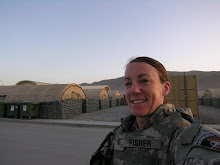
At the U.S. Embassy in Kabul
 

Subscribe To Mendstate

Posts
Atom
Posts
All Comments
Atom
All Comments