Showing posts with label SSTRO. Show all posts

Monday, February 16, 2009

Afghanistan

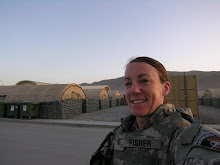
Soon I'll be off to Afghanistan to work on a USAID-sponsored assessment of the USG health-sector reconstruction activities. As part of this assessment, my office is also sponsoring a conference on the way ahead in health sector development. I have been coordinating this conference and will post the web announcement and registration page.

Meanwhile, I'm reading up on Afghanistan. Dave Kilkullen recently testified before Congress on "AFPAK" and a shortened version of his testimony can be found on the Small Wars Journal webiste here: http://smallwarsjournal.com/mag/docs-temp/177-kilcullen.pdf.

The interesting thing about all this is the growing (thankfully) recognition that there are geopolitical influences on health. Afghanistan cannot be treated as an entity in and of itself. USAID, apparently, has just sent out an assessment team to understand what can be done in the FATA region. It strikes me that repairing a hospital or training doctors is worthwhile, but probably not really the answer. It seems to me that there has to be structural change to the societies we are working in. And the way to understand this is to ascertain what their expectations and beliefs are. Normally, we do this through the Minister of Health in order to legitimize our actions. The problem with this is that while we gain approval and legitimacy for our actions, we don't understand whether our activities will actually prove viable or not. The normal answer for this problem is to hire NGOs. While NGOs provide part of the answer, I assume, they must be met with healthy skepticism as well since some NGOs are religiously-motivated, for example.

The effort in Afghanistan will continue to take time and patience. The American people will have to be reminded of 9/11 many times in the near future, I suspect. But as Kilkullen points out, there is no way to take short cuts here. Let's hope Charlie Wilson's War made its point.

Saturday, January 10, 2009

Unified Command Plan

The new Unified Command Plan was released recently, realigning responsibility for several nations, and more importantly, prioritizing stability, security and reconstruction operations (SSTRO) along with pandemic influenza.

First the pandemic influenza news is interesting because responsibility was given to NORTHCOM, the command that has responsibility for the U.S. area of operations. While the apparent intent of this move was to deliver this topic to one single agency for oversight, the discontinuity between the operational agencies of the military and the policy agencies may widen. Currently, the Assistant Secretary of Defense for Health Affairs (ASD(HA)) has responsibilities for surveillance operations. And, while not a Mars-Venus situation, NORTHCOM is miles away from D.C. both geographically and somewhat less, but not insignificantly, culturally. Pandemic Influenza response initiatives are wide and deep across the federal agencies, and it will be interesting to see how this apparent shift in responsibilities pans out.

Second, the prioritization of SSTR operations is interesting news. The reason for prioritizing stability operations (as they are called for short) is that the U.S. policy crowd would like to mitigate future conflict before it happens, and not always by application of the Bush doctrine. They would like the military to conduct operations that will create/support capable and legitimate governments. However, the use of the military for pre-conflict stability operations is an imaginative leap into an abyss for many in the military. With little evidence that using the military in this way actually creates any stability at all, other than hopeful anecdotes heard in conferences all across the land (validated by wonderful heart-warming photos of smiling children in dirty clothes and raggedy hair), the fighting force is asking the question--what are the priorities and where? The answer men, supposedly in the Department of State and U.S. AID, seem to be unhelpfully commenting in the media about what a bully DoD is for sucking up all the tax dollars, and not really stepping out with comprehensive and rationalized plans across any region at all. Aside from sniping at DoD, there also is much news from the Department of State about the Civilian Response Corps, which is supposedly a reserve force of willing and able civil servants who will march across the foreign lands (doing what?) in support of foreign programs. In other words, it seems as if there is a huge disconnect between the policy makers and the policy-executors, which is really nothing new.

This leads me to Afghanistan. The time is ripe for a broader prescription for what ails us in Afghanistan, but I have heard nothing from any quarter. The U.S. is engaged in two operations there: International Security Assistance Forces (ISAF), and Operation Enduring Freedom (OEF). The legal mandates for both do not allow expansive engagement with the multitudes working across the country. Instead we are restricted to building Afghanistan's own security forces, primarily. This is leading toward ineffective and piecemeal projects. Progress is slow. Painful. Yet where is the State Department? We need a comprehensive plan, with public diplomacy as a key driver. Keeping these two goals in mind, a plan must soon be articulated across the agencies so that the policy will finally connect with the execution. And even if the effort is messy, which is necessarily will be, we will finally at long last have taken the next step in this idea of stability operations.