Sunday, July 12, 2009

War, H1N1, and Personnel Readiness

This blog is about DoD's health communications, and the potential utility of a "whole of government response" to assist DoD with H1N1.

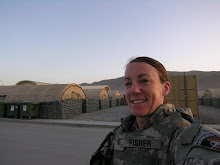
As H1N1 makes its way around the globe via public travel, and --troop deployments-- we also are apparently busy in Southern Command delivering protection kits to health care workers in Latin America (Click on the title of this blog for the story from Southcom). I have thought about this particular post for several days now because I am currently in training at a military base. Training at a military base involves heavy 'social' interaction. We eat together, do physical fitness training together, sit in a classroom, huddle around maps for harried planning discussions, congregate over a computer to produce briefing slides for the group, eat together some more, and live in a dorm-like setting. Social distancing is nearly impossible. A trip from my class room to the ladies' bathroom room requires that I touch 3 door handles/doors one way, or a total of six 'fomites' (things that carry germs by being touched repeatedly--like a door knob) for a round trip. While it might seem paranoid that I know this, apparently on this particular base there are verified cases of H1N1. We were told 22 cases when we first arrived. Yesterday, a class mate told me that someone in my class of about 125 students (but not in my particular section of 13 students) had fallen ill and was 'quarantined' to the back of the class. "WHAT?" I asked him. "Yah, the guy had to sit in the back of the class away from everyone-that's what I heard" said my colleague. We were warned, on the first day, that were we to fall ill, we would be quarantined and therefore miss more than the acceptable amount of course work with the end result of being expelled from the the course. Obviously the use of the word quarantine has strayed from its actual meaning.

There are real and potentially unpleasant results should we come down with H1N1. Most of us have been toiling for about a year now, and this is our last phase--to drop out now would be distressing. It might even mean that we would have to start all over because there are limited amounts of upcoming classes, and a limited amount of time to complete the entire course. (Therefore, my heightened sense of concern about the door handles is at least explainable, and perhaps entirely warranted. ) The dire warnings of quarantine therefore produce an incentive to not seek treatment for flu symptoms.

But getting back to the protection kits. While I completely understand the goodwill gesture of distributing protection kits, I am somewhat baffled by the institutional response of DoD. Rumors are starting to circulate about H1N1, with odd descriptions of quarantine and treatment (e.g. treatment with Tamiflu--one of the more dubious rumors) with a predictable amount of resulting confusion. This is how the military works, unfortunately.

So I went surfing through the publicly available DoD information on H1N1 is illuminating--it tells us to wash our hands, cover our nose and mouth when sneezing and stay at home if we get ill. The efficacy of face masks is unproven, therefore not among the recommended actions. Here's the DoD watchboard for H1N1: http://fhp.osd.mil/aiWatchboard/. Although we did receive a 'briefing' about H1N1 that told us that the symptoms of H1N1 are remarkably long lasting, and to cover our nose and mouths when we sneeze, we were not told about where to get more information, and the briefing concluded with the warning about quarantine.

Health communication seems to be the weak point in the DoD's response. While we are generous with our neighbors, I have to wonder if we are appropriately generous with ourselves? Is one website really an appropriate instutional response? Or, a briefing given to an officer with no public health background to present to a packed auditorium of students freshly arrived from disparate parts of the globe? Is this really the best we can do for ourselves? And, is this the appropriate level and style of communication considering the importance of troop readiness? After all, we are in the middle of two wars and troops cannot fight if they are sick. The military health system is stretched thin. Could the Public Health Service be useful here? Where is our "whole of government" response when we are trying to cope with a threat to our own national security right here at home?

While it could be argued that I'm thinking like Chicken Little and fretting over a falling sky, I suspect that our response to this relatively benign flu does not indicate a measured response should a more virulent flu appear this fall.

Tuesday, June 16, 2009

America's Global Health Influence from the Kaiser Family Foundation

I was discussing DoD's role in global public health with colleagues yesterday. Most people asking "what is DoD's lane" in global public health are from outside the DoD, and are part of NGOs, IOs, and other USG agencies. The Kaiser Family Foundation and CSIS are addressing the US government's role, and they have some interesting information posted on their website (http://globalhealth.kff.org). They not only have a break down of the monies spent by various agencies, they also have conducted a poll of American opinions about sustaining the substantial investment that the US is making around the globe.

I am beginning to think that the question of DoD's role in global public health is the wrong question, and is really being posed by people from within organizations that have options to either engage or not engage at will. The DoD, unlike other agencies, is not actually free to decide where it will engage, strategically speaking. Of course, at the tactical or programmatic level there are always decisions being made that have some effect. For example, the much-derided 'Medcaps'--somewhere at some level is a DoD employee who decides whether a medcap will be conducting in town X versus town Y. But at the strategic level, the DoD is engaged in Afghanistan and Iraq at the pleasure of our country's politicians. Not at the behest of Secretary Gates. Adding to this perspective of limited choice about the matter is the hierarchical nature of command. All military personnel understand that when the commander (at any level) says jump, everyone jumps. So, when a maneuver commander in Iraq tells his doc to go out and arrange a clinic in the nearby town, the doctor pretty much figures out how to do just that. There's only a very limited amount of free-will in the matter.

It has begun to occur to me that the question of DoD's role, as asked by those from within agencies where people at very low levels are directing programs and making independent decisions, and from within agencies that can decide to be in, say, Iraq, is being asked from the perspective and culture of will. The answer, from a DoD perspective, is that we go where we are told and do what we are told to do in the best way we can figure out. This answer is less than satisfactory to most questioners, and they keep asking.

So, I'm coming to the conclusion that the real discussion should be held at the point of contention: the competition on the ground or in the 'humanitarian space' as it is called. The real question, it seems to me, should be how can we mitigate profound confusion and misalignment of intent? The topic that nobody wants to address is right there: intent. The institutional bias of the Department of Defense will always make the health of other populations a secondary result or interest. In other words, the DoD is actually a health-destroying war-making organization. We know how to fight conflicts. Even in counter-insurgency when the goal is to secure populations and 'win hearts and minds', the DoD's focus will be on security. That's the fundamental nature of the beast. Not making foreign populations healthy. So, how do we create some order and sense of cooperation among the various actors? I think this is the more productive question.

Saturday, June 13, 2009

The Long Silence is hereby officially broken: CNAS conference and H1N1

Haven't had a chance to blog for the past month, but I'm back. So much has gone on, it's hard to know where to start.

First, congratulations to Chris Albon for passing his oral exams, and now being ABD. Chris writes the War and Health blog.

H1N1
Second, the H1N1 epidemic. Guess who exported it to Kuwait via the war in Iraq? We did, apparently. Here's a report from Reuters: (URL http://www.reuters.com/article/healthNews/idUSTRE54M1G720090524)

KUWAIT (Reuters) - Eighteen U.S. soldiers in Kuwait have H1N1 flu, the first cases in the Gulf Arab oil-exporting region, a government official said on Sunday.

"(The soldiers) were confirmed with the virus upon their arrival from their country to the military base (in Kuwait)," Ibrahim al-Abdulhadi told Reuters.

Kuwait is a logistics base for the U.S. army for neighboring Iraq, where the U.S. military said there were no known cases yet of H1N1.

What are the implications of this? Obviously there are diplomatic issues, issues relating to quarantine, sovereignty and the war. Not insignificant.

CNAS

Next, I had the good fortune to attend the Center for New American Security's day-long conference on the counter-insurgency in Iraq and Afghanistan, the problems with North Korea, and a session tossed in about the security implications of natural resources. Kind of an odd mix. The session on natural resources completely bogged down and became dangerously close to sounding like a self-licking-ice-cream-cone argument. Senator Warner moderated the panel and was pleased to describe his previous legislation that demanded that DoD address resource issues in terms of security. The CNAS staffer leading the discussion, Sharon Burke, claimed that it was DoD's responsibility to both fight the nation's wars as well as mitigate potential future wars. (Oh, really? I didn't see that in the Constitution...I'll have to go look again). The panel consisted of two academics and one Navy Commander who is responding to the good Senator's legislation by addressing the security issues relating to resources for the upcoming QDR. Nobody else from DoE or EPA was present apparently. Is DoD really the answer to resource issues? While I don't think it's irrelevant for DoD to be engaged in the discussion, sticking a Navy commander up on the panel with no other USG representative potentially skews the argument. Obviously this problem would require a whole of government approach, but where was the rest of the government?

Quite in contrast to the resource discussion was a panel all about the North Korea problem. The panel consisted of CNAS staff and diplomats with nary a military member present. Really? So, DoD should focus on resources, but not North Korea? I asked about this at the really swell post-conference cocktail party and was told that CNAS had asked for a DoD rep, but the timing was short and none had been proffered. Too bad.

The lunch speaker was the Honorable Judith McHale who gave a terrible speech, reading in a soft voice from her notes, about public diplomacy. It was disappointing to me that when someone from the audience asked about the distinction between Public Diplomacy and Strategic Communications she couldn't answer the question. Oh oh. Obviously she has only been in the position for a couple of weeks, but I would have thought her staff might have briefed her up on what it is that her agency is supposed to do--public diplomacy. I've heard that staffs don't do that in the other governmental agencies.

Look to CNAS to enter the military health/military readiness arena shortly. The basic premise is that if you have a military force with PTSD and TBI and other health issues, readiness is declinated. The 'mavricky' team at CNAS (to borrow a term from the Palin SNL skits) has reached out to an officer who has been severely wounded and become an advocate for soldier's health while remaining in the military. He himself is somewhat mavricky and I look forward to seeing what comes of the effort.

I have much more to post--stay tuned. First I have to write a paper for Command and General Staff College.

Saturday, May 9, 2009

President's Global Health Initiative

The President's Global Health Initiative is resoundingly vague. I see Tommy Thompson in the reference to neglected tropical diseases (really? that's one of our national priorities?), and Joseph Nye and other smart and snappy pol-fashionistas in the reference to smart power. Fortunately the Millenium Development Goals were snuck in there as a nod to gravitas.

You can view the President's statement by clicking on my title, or here's the URL: http://www.whitehouse.gov/the_press_office/Statement-by-the-President-on-Global-Health-Initiative/

DoD has issued several Reports to Congress

DoD is required to issue reports to Congress about Iraq, Afghanistan and Stability Operations in general.

From the Report on Iraq, it looks as if progress is being made, but not very much--certainly not enough to register in public opinion (available here: http://www.defenselink.mil/pubs/pdfs/Measuring_Stability_and_Security_in_Iraq_March_2009.pdf)


Healthcare
The Ministry of Health (MoH) faces serious human resource challenges across the spectrum of healthcare professionals and ancillary staff. With Iraq’s improved security environment, the MoH has worked diligently to encourage the return of expatriate physicians; the Minister estimates that more than 1,000 physicians returned to Iraq in 2008. To increase skills, the MoH has sent 75 Iraqi medical specialists and subspecialists to various U.S. hospitals and clinics for month-long clinical rotations. Jointly, the MNF-I surgeon and the MoH are finalizing plans to rotate Iraqi healthcare providers through Coalition force hospitals and clinics throughout Iraq. The U.S. Army Corps of Engineers has transitioned 133 new Public Health Clinics to the MoH, although full potential remains limited by poor staffing and the lack of adequate essential services (i.e., electricity, water, and sewage) in some provinces.


Health awareness initiatives and responses to disease outbreaks have been very effective this year, reducing cholera cases by 80%, from 4,700 cases in 2007 to 925 cases in 2008. The MoH is also increasingly able to identify, diagnose, and treat diseases independently. Despite this initial progress, national polling indicates that only 26% of Iraqis are either somewhat or very satisfied with health services, 11 percentage points lower than in November 2007.12


If you go back and read the December version of the same report, the content is basically the same, which makes me wonder about the reporting strategy, and what kind of plan is in place to articulate what is being done vice the objectives.

And here's DoD report on Afghanistan from January 2009: (http://www.defenselink.mil/pubs/OCTOBER_1230_FINAL.pdf) Things are similarly progressing in Afghanistan, though this report does not try to tie the efforts to public opinion, oddly enough. See my other posts on Afghanistan for the similar disconnect between public opinion in Afghanistan and the gains in health care.

Here is the "health" section of the January report: (pg 71)

The ANDS states that by 2010 the Basic Package of Health Services (BPHS) will cover at least 90 percent of the population and maternal mortality will be reduced by 15 percent. Afghanistan has made significant strides in increasing access to basic health care, and reducing overall morbidity and mortality rates. The country has seen improvements in child mortality rates and immunization rates. The MoPH developed the BPHS, a program that includes maternal and newborn health, child health and immunization, public nutrition, communicable diseases, mental health, disability, and supply of essential drugs. In September 2008, 80 percent of the population had access to the BPHS, up from 8 percent in 2001. In summer 2008 USAID and the GIRoA signed an agreement to provide up to $236 million over five years to finance additional health care services in 13 Afghan provinces, with the funds contracted and managed through internal GIRoA processes, for the first time.
Based on this precedent, the European Commission has also elected to now pass its funds through GIRoA-managed processes. In 2007, the Global Alliance for Vaccine and Immunization approved a GIRoA proposal for strengthening the health system, and awarded the Government with $34.1 million dollars between 2007 and December 2011. Current MoPH initiatives include a plan to establish 120 sub-center clinics and 80 mobile health teams. Two sub-center clinics and four mobile health teams were established in June 2008 in Kabul, Parwan, Panjshir and Kapisa
provinces.

Over the next five to seven years, the MoPH will require substantial international
aid; including funding, personnel, mentoring, and assistance; to continue providing the current level of services and to develop a plan to build a self-sustaining health care system in Afghanistan.

There are several important ideas presented in these two reports that are worth monitoring. First, that health is apparently a relatively minor contributor to stability. It seems that health is worth talking about, but not much. It strikes me as odd how much discussion in doctrine and in these reports focuses on economics, but I do not believe that there is a designated specialist in the Armed Forces' officer corps for "economist" (that's militarese for--don't think we have economists running around in uniform.) There is no clear discussion about the relative merit of the various efforts and how they might combine to affect improvements either in popular sentiment or in government capacity.

Another interesting idea here is that DoD has to report to Congress about its goings on, but I wonder what the feedback loop is. If you read the report on Iraq, one of the brilliant successes, apparently, is that the US forces have sent 75 medical specialists to one-month rotations in US hospitals. If I were a member of Congress I would ask if that really is the most notable thing to report, and if so, what strategy are we working on here that we think that sending 75 docs to a one-month rotation was going to make substantial strides in the counter insurgency and the rebuilding of Iraq? Perhaps it is significant, but from a close read I'm not sure I get it. My concern is not so much with the content of the report as it is with the strangeness of reporting. Why report at all?

If DoD has to report to Congress about what it and the other agencies are striving to do, when is Congress and the NSC going to provide clear leadership and signal to the American public and the rest of the USG that we are at war, people are dying on our side and theirs, and a withdrawal is not the simple solution we would wish it to be. Oh wait, that would be hard work, and maybe unpopular work.

Sunday, May 3, 2009

USG, DoD, DoS and USAID response to the H1N1 flu

Here's the U.S. Pandemic Flu page: http://www.pandemicflu.gov/.

Interesting to note that Secretary Clinton, in a preamble to her briefing to Congress, acknowledged the DoS' role in the H1N1 outbreak:http://www.state.gov/secretary/rm/2009a/04/122462.htm .

And, USAID has let lose with $5M: http://www.usaid.gov/press/releases/2009/pr090428.html

Also, DoD has a "Pandemic Influenza Watchboard" available on the web: http://fhp.osd.mil/aiWatchboard/. One of the issues for DoD is personnel managment. Pandemic influenzas could reduce the 'readiness' of military personnel to do their jobs. Obviously this is not currently the issue, but the Military Health System has been diligently preparing rules, guidelines and practices. I wonder if the other agencies have done the same?

Civilian Response Corps

The Center for Technology and National Security has issued a report called Civilian Surge: Key to Complex Operation. (URL: http://www.ndu.edu/ctnsp/CivSurge_Book.htm). I received an email that summarizes the report well:

Edited by Hans Binnendijk and Patrick M. Cronin, the study recommends what
civilian capacity to build, how much of it is needed, and how to manage and
organize it. Major findings of the book include the following:

* The civilian response capacity force size would best be
served by 5,000 deployable, active-duty government civilians and 10,000
civilian reserves. The cost would be about $2 billion annually.
* The National Security Council's oversight role needs to be
significantly strengthened, the sine qua non of an effective,
whole-of-government approach. A new "cross-functional interagency team"
should be created to coordinate all complex operations.
* The military has adjusted well to the new, complex missions,
but its risks overstretch and needs its civilian partners to build up their
capacity to conduct complex operations.
* The State Department should focus on developing
"stabilization-savvy" diplomats, who should be plugged directly into
"seventh-floor" executive crisis management activities.
* The United States Agency for International Development
should be the operational agency charged with training and equipping
civilians for complex missions. It should be restructured and renamed the
Agency for Development and Reconstruction to reflect its main missions.
* Domestic civilian agencies have skills useful to overseas
complex operations, but special legislation and funding is required to allow
them to participate fully.
* Efforts to educate interagency personnel for complex
operations have stalled and need to be revitalized.
* Overreliance on civilian contractors to fill this need has
led to inadequate government oversight. A new contracting standard is needed
focused on maintaining agency core competencies.
* Homeland security events, such as the response to Hurricane
Katrina, are also complex operations that require collaboration and skill
sets similar to overseas operations. The United States needs to organize in
a way that takes maximum advantage of these synergies.
* Since the US is unlikely to engage in future complex
operations unilaterally, Washington needs to mobilize the civilian capacity
of its friends and allies.
* Connecting with nongovernmental organizations and local
actors is critical, along with maximum sharing of unclassified information
with civilians.


The first part of the report describes (as do most reports like this) a greatly reduced Department of State and USAID when compared to the Vietnam era. And obviously the report ultimately calls for a greatly improved cadre of trained professionals. Interestingly, Secretary Clinton has recently described in testimony before Congress, that the DoS is having trouble finding 500 civilians to go to Afghanistan, and I read in the Washington Post that there is a request before Secretary Gates for military reservists to fill some of the positions, but the reservists would wear civilian clothes and be "low profile" which I assume means unarmed.

I have mixed thoughts about this request, and this direction. First of all, the Army Reserve and Army National Guard have been used fairly heavily in the two conflicts, and are also serving as "backstops" to the active component when the active duty units deploy. Having said that, in reality, a few hundred soldiers is not such a stretch for the entire reserve force (all Services have Reservists), so at least the superficial requirement of finding a body to fill a slot should not be a big deal. What the military has a great deal of trouble doing is finding the right body with the right skills to fill a slot.

The problem for a Reservist (from my perspective) with this plan is that it would do nothing for a military career and in fact could damage it. Much like the civilian world, when a Reservist leaves his 'professional community' people forget who he is, and it becomes much more difficult to describe what he can bring to the table. General Officers are still made from people who followed the very traditional career path of platoon leader, operations officer, executive officer, commander, and so on. So, there is little incentive for the Reservist. At least an Army Reservist (not sure what it's like in the other Services.) Finally, I envision the "low profile" being a partial deterrent to Reservists. From my limited experience, apparently civilians do not have to follow the same force protection rules that the military follows and this might inhibit some from volunteering.

The call to create a civilian response corps has been circulating around D.C. for several years, and the DoS has started to create its own "civilian reserve force". I suspect that it is having trouble incentivizing its employees to join, and this gets back to a refrain often heard in the military: the military is at war, and the rest of the country is not. Were I a civilian living in my pleasant salubrious suburb here in D.C. with a nice comfortable job in the city, why would I want to risk my health, and my life to go to Iraq or Afghanistan? It's a realistic question that the USG must answer. Are we at war, and if so, what is the accountability of the rest of the USG and the rest of the nation for the outcome?

I heard a briefing given by then-retiring Major General Fastabend from the Army's operations division (G3/5/7) who made the point that the military is always accountable. From "winning the war" to protecting service members to protecting Afghan and Iraqi civilians. It's often a life and death accountability. But what about everyone else? I don't think the current administration has answered this question to itself or to the nation.